
HomeEuropean CountriesBritish IslesUK Company Formation for Non-Residents: Register a UK Company from Anywhere in the World
UK Company Formation for Non-Residents: Register a UK Company from Anywhere in the World
Expand your business internationally with a UK Private Limited Company — even if you don't live in the United Kingdom.
Contrary to what many entrepreneurs believe, you do not need to be a UK resident or a British citizen to register a UK company. Thousands of international business owners, consultants, e-commerce sellers, technology startups and investors successfully establish UK companies every year while living overseas.
A UK Private Limited Company offers international credibility, a respected legal framework, access to global markets and one of the world’s most recognised business jurisdictions. The registration process is straightforward, can usually be completed remotely, and in most cases there is no need to travel to the UK.
At BRIS Group, we help entrepreneurs and companies from around the world establish and maintain UK businesses. From company incorporation and registered office services to ongoing compliance support, our specialists guide clients through every stage of the process.
Whether you are launching your first international business, expanding an existing company or entering the UK market, this guide explains everything you need to know about UK company formation for non-residents.

Request a Free Consultation
Planning to register a UK company as a non-resident?
Our specialists will help you choose the right company structure, prepare the required documents and guide you through the incorporation process.
In This Guide

Can a Non-Resident Register a UK Company?
Yes. You do not need to live in the United Kingdom or be a British citizen to register a UK Private Limited Company.
Non-residents can generally act as directors and shareholders, and the incorporation process can usually be completed remotely without travelling to the UK.
Every company must still meet UK legal requirements, including maintaining a UK registered office address, providing the required company and ownership information, and completing ongoing Companies House filings.
BRIS Group assists international entrepreneurs with the full incorporation process, from preparing the application to registered office and ongoing compliance support.
Ready to register? View our UK Private Limited Company Formation service and packages.
💡 BRIS Expert Tip
Many entrepreneurs believe they need a UK resident director to establish a company in Britain. This is one of the most common misconceptions. In most cases, UK law does not require the director of a private limited company to be a UK resident. What matters is that the company complies with UK legal and reporting obligations.
Why Choose the UK for Business?

The United Kingdom remains one of the world’s most attractive jurisdictions for company formation. Every year, thousands of entrepreneurs, investors and international businesses choose to establish a UK Private Limited Company because of its strong legal framework, global reputation and straightforward incorporation process.
For non-residents, the UK offers an opportunity to operate through one of the world’s most respected business jurisdictions without the need to relocate or become a UK resident. In many cases, a company can be incorporated entirely remotely, making it an attractive option for international entrepreneurs expanding into global markets.
Whether you are launching an e-commerce business, providing professional services, developing software, managing international trade or building a startup, a UK company can enhance your business credibility while giving you access to a well-established corporate environment.
Benefits of Registering a UK Company
| Benefit | Why It Matters |
|---|---|
| Global credibility | A UK company is recognised and trusted by clients, suppliers and financial institutions around the world. |
| Remote incorporation | In most cases, non-residents can register a company without travelling to the UK. |
| Fast registration | Companies Straightforward applications can often be processed quickly by Companies House, although processing times may vary depending on verification and compliance requirements. |
| Flexible ownership | Shareholders and directors can generally be individuals or corporate entities from most countries. |
| Transparent legal system | UK company law provides a stable and internationally respected legal framework. |
| Access to international markets | A UK company can make it easier to work with global customers, suppliers and business partners. |
Although incorporating a company in the UK is relatively straightforward, choosing the right company structure and ensuring compliance with Companies House and HMRC requirements from the outset is equally important. Proper planning helps avoid unnecessary delays, additional costs and future compliance issues.
💡 BRIS Expert Tip
Many entrepreneurs choose a UK company not only because of the British market itself, but because a UK legal entity often increases confidence among international clients, payment providers and business partners. For service businesses, technology companies and online entrepreneurs, credibility can be just as valuable as the registration process itself.
Who Can Register a UK Company?
One of the greatest advantages of forming a UK Private Limited Company is that it is open to entrepreneurs from almost anywhere in the world. In most cases, there are no nationality or residency restrictions preventing a foreign individual or overseas business from incorporating a UK company.
A UK company can be established by individuals, multiple shareholders or even another corporate entity. This flexibility makes the UK an attractive jurisdiction for startups, international trading businesses, consultants and companies looking to expand into new markets.
UK company formation may be suitable for:
✔ International entrepreneurs launching a new business
✔ Freelancers and consultants working with global clients
✔ E-commerce businesses selling through Amazon, Shopify, Etsy or other online marketplaces
✔ Technology startups and SaaS companies
✔ Import and export businesses
✔ International holding companies
✔ Investors looking to establish a UK corporate presence
✔ Existing overseas companies expanding into the UK market

While UK company registration is available to applicants from most countries, each business should be assessed individually. Depending on your circumstances, additional requirements may apply, particularly where regulated activities, banking, taxation or anti-money laundering (AML) compliance are involved.
At BRIS Group, we help entrepreneurs from around the world determine the most suitable company structure based on their business goals, ownership structure and future expansion plans.
📌 Important
Being able to register a UK company does not automatically grant the right to live, work or obtain a visa in the United Kingdom. Company incorporation and UK immigration are separate legal matters and should not be confused.
Requirements for Non-Residents
Before submitting a UK company incorporation application, non-resident founders must provide the information required by Companies House and ensure that the proposed company structure meets UK legal requirements.
The main requirements include:
- A unique company name
- At least one director
- At least one shareholder
- A UK registered office address
- A registered email address
- Details of the Persons with Significant Control (PSC)
- A Standard Industrial Classification (SIC) code describing your business activity
- Information about the company’s share capital
The following sections explain each requirement in more detail.
Company Name
Choosing the right company name is one of the first steps in registering a UK Private Limited Company.
The proposed company name must be unique and must not be identical or too similar to an existing company registered with Companies House. It must also comply with the rules set out in the Companies Act 2006 regarding sensitive words, restricted expressions and prohibited terms.
A well-chosen company name should not only meet legal requirements but also reflect your brand, be easy to remember and inspire confidence among customers, suppliers and business partners.
Before submitting your incorporation application, it is advisable to check the availability of the proposed name and consider whether a corresponding domain name is available if you intend to create a business website.
💡 BRIS Expert Tip
Choosing a company name is more than a legal requirement—it's an important branding decision. A clear, memorable and professional name can strengthen your company's identity and make it easier for customers to find and remember your business.
Registered Office Address
Every UK Private Limited Company is legally required to have a registered office address in the United Kingdom. This is the company’s official address for receiving statutory correspondence from Companies House, HM Revenue & Customs (HMRC) and other government authorities.
The registered office must be a physical address located in the same UK jurisdiction where the company is incorporated. For example, a company incorporated in England and Wales must have a registered office address in England or Wales.
The registered office address appears on the public Companies House register. If you do not wish to use your home or business address, you may use a professional registered office service.
For more information about this service, please see our UK Registered Office Service page.
💡 BRIS Expert Tip
Using a professional registered office service helps protect your privacy, ensures that official correspondence is received securely and provides a professional business presence in the United Kingdom.
Director
Every UK Private Limited Company must have at least one director who is a natural person and is at least 16 years old.
A company director is responsible for managing the business and ensuring that the company complies with its legal obligations. These responsibilities include maintaining accurate company records, filing annual accounts and confirmation statements, and meeting other statutory requirements set by Companies House and HMRC.
In most cases, the director does not need to be a UK resident or a British citizen. Non-residents can legally act as directors of a UK company, making the UK an attractive jurisdiction for international entrepreneurs.
A company may appoint additional directors at the time of incorporation or at any stage after the company has been formed.
Shareholder
Every UK Private Limited Company must have at least one shareholder.
The shareholder owns the company by holding its shares and may be an individual or a corporate entity. In many small businesses, the same person acts as both the director and the sole shareholder.
There is generally no requirement for shareholders to be UK residents or British citizens. This allows overseas entrepreneurs to own and control a UK company while living abroad.
The number and value of shares issued determine the ownership structure of the company and the rights of each shareholder.
Person with Significant Control (PSC)
UK law requires every company to identify its Persons with Significant Control (PSC) and maintain an up-to-date PSC register.
A PSC is generally an individual who:
- Owns more than 25% of the company’s shares;
- Holds more than 25% of the voting rights;
- Has the right to appoint or remove the majority of the directors; or
- Otherwise exercises significant influence or control over the company.
Most PSC information must be reported to Companies House and forms part of the public company record.
Registered Email Address
Every UK company must provide a registered email address during the incorporation process.
Companies House uses this email address to send important communications relating to the company, including filing reminders and official notifications. Unlike the registered office address, the registered email address is not publicly available on the Companies House register.
It is important to ensure that the email address remains active and is monitored regularly so that important statutory correspondence is not missed.
Business Activity and SIC Code
When registering a UK company, you must specify the nature of your business activities by selecting one or more Standard Industrial Classification (SIC) codes.
SIC codes are used by Companies House to classify the company’s principal business activities. Choosing the most appropriate code helps accurately describe what your business does and forms part of the company’s public record.
If your company carries out more than one type of business activity, you may select multiple SIC codes, provided they accurately reflect your operations.
Share Capital
A UK Private Limited Company must issue at least one share when it is incorporated.
For many small businesses, the simplest structure is to issue one ordinary share with a nominal value of £1 to a single shareholder. However, companies with multiple owners may choose a different share structure to reflect each shareholder’s ownership interest and voting rights.
The most appropriate share structure depends on the company’s ownership, future investment plans and long-term business objectives.
📌 Important
Before submitting your incorporation application, make sure that all information provided is accurate, complete and consistent. Incorrect or incomplete details may delay the registration process and could result in additional administrative work after the company has been incorporated.
Documents Required
Non-resident directors and shareholders may be required to provide identification and address documents as part of the incorporation and compliance process.
Typical documents include:
| Document | Purpose |
|---|---|
| Valid passport or national identity card | To verify the identity of directors, shareholders and beneficial owners. |
| Proof of residential address | To confirm the individual’s residential address. This may include a recent utility bill, bank statement or other accepted document. |
| Company information | Including the proposed company name, registered office address, business activity and share structure. |
| Director and shareholder details | Full names, dates of birth, residential addresses, nationality and occupation. |
| Persons with Significant Control (PSC) information | Details of individuals who own or control the company. |
Depending on the circumstances, additional documentation may be requested to verify the source of funds, ownership structure or intended business activities.
Providing clear and accurate documentation from the outset helps ensure a smoother incorporation process and reduces the likelihood of delays.
💡 BRIS Expert Tip
Preparing your documents before starting the incorporation process can significantly reduce processing time. If any documents are issued in a language other than English, certified translations may be required in certain circumstances.
Step-by-Step UK Company Registration Process
Registering a UK Private Limited Company is generally a straightforward process when all required information has been prepared in advance. In many cases, the company can be incorporated remotely without the need to travel to the United Kingdom.
The following steps outline the typical company formation process for non-residents.
Step 1. Choose a Company Name
Select a unique company name that complies with Companies House regulations. Before submitting your application, it is advisable to check that the name is available and suitable for your business.
Step 2. Prepare the Company Structure
Decide who will be the company’s directors, shareholders and Persons with Significant Control (PSC). You should also determine the share structure and ownership percentages before incorporation.
Step 3. Appoint a Registered Office Address
Every UK company must have a registered office address within the appropriate UK jurisdiction. This address will be used to receive official correspondence from Companies House and HMRC.
Step 4. Select Your Business Activity
Choose the appropriate Standard Industrial Classification (SIC) code or codes that best describe your company’s principal business activities.
Step 5. Submit the Incorporation Application
Once all required information has been prepared, the incorporation application is submitted to Companies House for review and registration.
Step 6. Receive Your Company Documents
Once the application has been approved, Companies House issues the Certificate of Incorporation. The company will also receive its company number and official registration details.
Step 7. Complete Post-Incorporation Requirements
Depending on your business activities, additional steps may be required after incorporation. These may include opening a business bank account, registering for VAT, registering as an employer with HMRC or arranging accounting and compliance services.
Although incorporating a UK company is relatively simple, ongoing compliance is equally important. Directors are responsible for maintaining statutory records, filing annual accounts and confirmation statements, and ensuring that the company continues to meet its legal obligations.
💡 BRIS Expert Tip
Many entrepreneurs focus only on incorporating the company. However, ongoing compliance after registration is just as important. Planning for accounting, statutory filings and regulatory obligations from the very beginning can help avoid unnecessary penalties and administrative issues in the future.
Want BRIS Group to handle the registration? Explore our UK company formation page and choose the level of support you need.
UK Registered Office Requirements
A registered office is a legal requirement for every UK Private Limited Company. It serves as the company’s official address for receiving statutory correspondence from Companies House, HM Revenue & Customs (HMRC) and other government authorities.
The registered office must be located in the same UK jurisdiction where the company is incorporated. For example, a company incorporated in England and Wales must have a registered office address in England or Wales.
As the registered office address is publicly available on the Companies House register, many international entrepreneurs prefer to use a professional registered office service rather than their personal or business address. This helps protect privacy while ensuring that official correspondence is handled securely and professionally.
It is important to understand that a registered office is a legal correspondence address. It does not have to be the place where the company carries out its business activities.
If your business does not have a physical presence in the United Kingdom, a registered office service can provide a practical solution while helping you meet your statutory obligations.
💡 BRIS Expert Tip
A professional registered office service not only protects your privacy but also helps ensure that important documents from Companies House and HMRC are received promptly, reducing the risk of missed deadlines or compliance issues.
Director Service Address
In addition to a registered office, company directors may choose to use a Director Service Address, sometimes referred to as a service address.
A service address is the official correspondence address for a director and is displayed on the public Companies House register instead of the director’s residential address. This allows directors to maintain their privacy while remaining fully compliant with UK company law.
Although directors are still required to provide their residential address to Companies House, this information is generally protected from public disclosure when a separate service address has been appointed.
For non-resident directors, using a professional service address is often a practical way to protect personal information while maintaining a professional business presence in the United Kingdom.
📌 Important
A Registered Office Address and a Director Service Address serve different purposes.
The registered office belongs to the company, while the service address belongs to an individual director. Many businesses choose to use both services to improve privacy and ensure professional handling of official correspondence.
UK Tax Considerations for Non-Residents
One of the most common misconceptions is that registering a UK company automatically means that all of the company’s profits are taxed in the United Kingdom. In reality, the tax position depends on several factors, including where the company is managed, where its business activities take place and the tax residency of its directors.
A UK company is generally subject to UK Corporation Tax on its taxable profits. However, the company’s overall tax obligations may also be affected by international tax rules, double taxation agreements and the tax laws of the country where the directors or shareholders are resident.
Non-resident directors and shareholders may also have personal tax obligations in their country of residence. Owning a UK company does not automatically exempt an individual from local reporting or taxation requirements.
Depending on the nature of the business, additional UK tax registrations may also be required, including:
- Corporation Tax registration with HMRC.
- VAT registration (where applicable).
- PAYE registration if the company employs staff.
- Construction Industry Scheme (CIS) registration for eligible construction businesses.
- Other sector-specific registrations where required.
As every business has unique circumstances, obtaining professional tax advice before and after incorporation can help ensure that your company remains fully compliant while operating as efficiently as possible.
💡 BRIS Expert Tip
Company incorporation and tax planning are two separate matters. Registering a UK company is only the first step. Before trading, it is important to understand your ongoing tax obligations both in the UK and in your country of residence.
Opening a UK Business Bank Account
Opening a business bank account is one of the first practical steps after incorporating your UK company.
While UK law does not require every company to have a UK bank account, maintaining a dedicated business account is highly recommended. It helps separate business and personal finances, simplifies accounting and presents a more professional image to customers and suppliers.
For non-residents, opening a traditional UK bank account can sometimes be more challenging than the company registration itself. Many banks require identity verification, proof of business activities and, in some cases, evidence of a connection with the United Kingdom.
Fortunately, there are now many alternatives, including digital business banking providers and electronic money institutions that offer accounts suitable for international entrepreneurs.
The documentation required typically includes:
- Certificate of Incorporation.
- Company registration number.
- Details of directors and shareholders.
- Proof of identity.
- Proof of residential address.
- Information about the company’s business activities.
The exact requirements vary depending on the financial institution and the level of due diligence required.
💡 BRIS Expert Tip
Choosing the right banking solution depends on your business model, the countries where you operate, your expected transaction volumes and the currencies you intend to use. Selecting the right provider from the outset can save significant time and administrative effort as your business grows.
Common Mistakes to Avoid
Although registering a UK company is relatively straightforward, many entrepreneurs encounter avoidable problems that can lead to delays, additional costs or ongoing compliance issues.
Being aware of these common mistakes can help you establish your business on a solid legal and administrative foundation.
Choosing an Inappropriate Company Structure
Selecting the wrong ownership or share structure at the beginning can make future changes more complicated and expensive. It is advisable to consider your long-term business plans before incorporation.
Using an Unsuitable Registered Office Address
Some entrepreneurs use temporary or unreliable addresses without considering how important official correspondence is. Missing letters from Companies House or HMRC can result in penalties or even the company being struck off the register.
Ignoring Ongoing Compliance Requirements
Registering a company is only the beginning. Every UK company has continuing legal obligations, including filing annual accounts, submitting a confirmation statement and maintaining statutory records.
Failing to Understand Tax Obligations
Many business owners incorrectly assume that company registration automatically determines where tax is payable. In reality, tax residency, business activities and international tax rules all influence a company’s tax position.
Delaying Business Bank Account Arrangements
Leaving banking arrangements until after trading has started can delay payments, contracts and business operations. It is advisable to explore suitable banking options as early as possible.
Providing Incorrect or Incomplete Information
Errors in director details, shareholder information or company data can delay incorporation and may require additional filings to correct after registration.
Trying to Handle Everything Without Professional Advice
While it is possible to register a company independently, professional guidance can help prevent costly mistakes and ensure that the company remains compliant from the very beginning.
💡 BRIS Expert Tip
Many of the problems we help clients resolve could have been avoided with proper planning before incorporation. Taking a little extra time to structure your company correctly at the outset is often far less expensive than correcting mistakes later.
Why Choose BRIS Group
For more than 13 years, BRIS Group has been helping entrepreneurs, investors and international businesses establish and manage companies across multiple jurisdictions.
We understand that forming a company is only the first step. Our goal is to provide practical, long-term support that allows you to focus on growing your business while we take care of the administrative and compliance requirements.
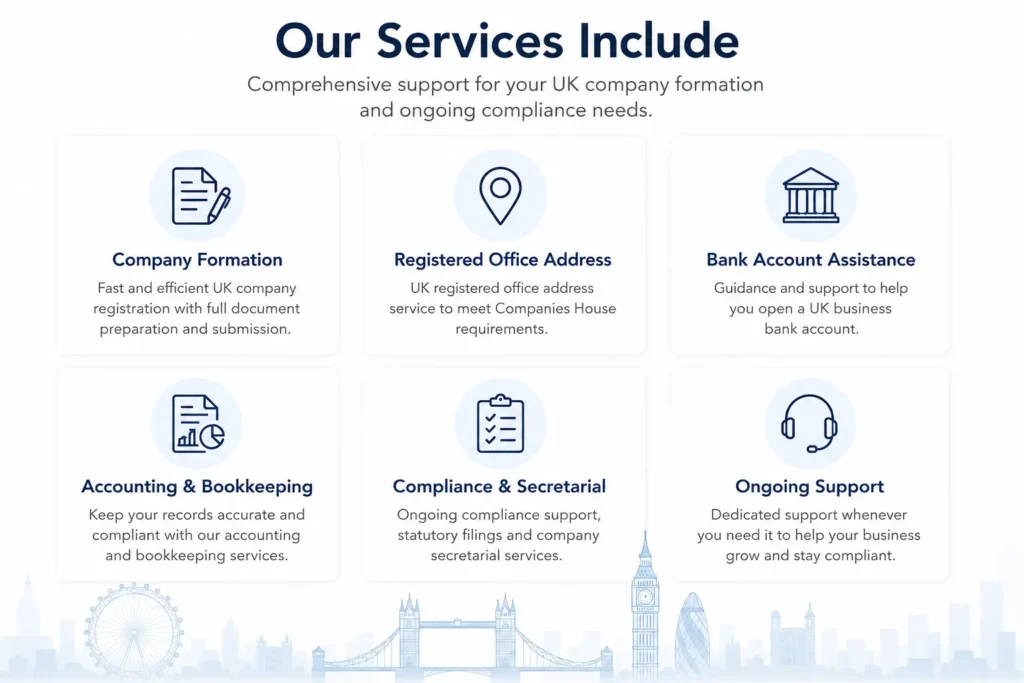
Our Services Include
✔ UK company formation for residents and non-residents
✔ Registered Office Address services
✔ Director Service Address services
✔ Company secretarial support
✔ Accounting and tax compliance
✔ VAT registration
✔ Company restoration and corporate changes
✔ International company formation
✔ Business consulting and ongoing corporate support

Why Clients Choose Us
✔ More than 13 years of international corporate experience
✔ Fast and efficient incorporation process
✔ Transparent pricing with no hidden fees
✔ Dedicated support from experienced specialists
✔ Comprehensive post-incorporation services
✔ Personal approach for every client
✔ Assistance for entrepreneurs from around the world
Need help registering your UK company?
Contact BRIS Group today for professional advice and a smooth, hassle-free incorporation process.
Frequently Asked Questions (FAQ)
Yes. Non-residents can legally register and own a UK Private Limited Company. There is no requirement for directors or shareholders to be UK citizens or UK residents. However, every company must have a registered office address in the UK and comply with Companies House and HMRC requirements.
No. In most cases, the entire incorporation process can be completed remotely. BRIS Group can assist international clients with company formation, registered office services and ongoing compliance without the need
Most UK companies are incorporated within 24 hours once the application has been submitted to Companies House. In some cases, additional identity verification or compliance checks may extend the processing time.
Yes. A UK Private Limited Company can be owned and managed by a single individual. One person may act as the sole director, sole shareholder and Person with Significant Control (PSC).
Yes. Every UK company is legally required to maintain a registered office address within the jurisdiction where it is incorporated. If you do not have your own UK address, BRIS Group can provide a professional Registered Office Service.
Explore our complete UK Company Formation FAQ →
Ready to Register Your UK Company?
Start your UK company with professional support from BRIS Group. Choose the formation package that suits your requirements, or contact us if you would like to discuss your company structure before proceeding.
View UK Company Formation Packages
Disclaimer: The information provided on this page is for general informational purposes only and does not constitute legal, tax, accounting or other professional advice. Requirements may vary depending on individual circumstances and may change over time. You should obtain appropriate professional advice before making any business decision.
Manage Cookie Consent
To provide the best experiences, we use technologies like cookies to store and/or access device information. Consenting to these technologies will allow us to process data such as browsing behaviour or unique IDs on this site. Not consenting or withdrawing consent, may adversely affect certain features and functions.
Functional
Always active
The technical storage or access is strictly necessary for the legitimate purpose of enabling the use of a specific service explicitly requested by the subscriber or user, or for the sole purpose of carrying out the transmission of a communication over an electronic communications network.
Preferences
The technical storage or access is necessary for the legitimate purpose of storing preferences that are not requested by the subscriber or user.
Statistics
The technical storage or access that is used exclusively for statistical purposes.
The technical storage or access that is used exclusively for anonymous statistical purposes. Without a subpoena, voluntary compliance on the part of your Internet Service Provider, or additional records from a third party, information stored or retrieved for this purpose alone cannot usually be used to identify you.
Marketing
The technical storage or access is required to create user profiles to send advertising, or to track the user on a website or across several websites for similar marketing purposes.