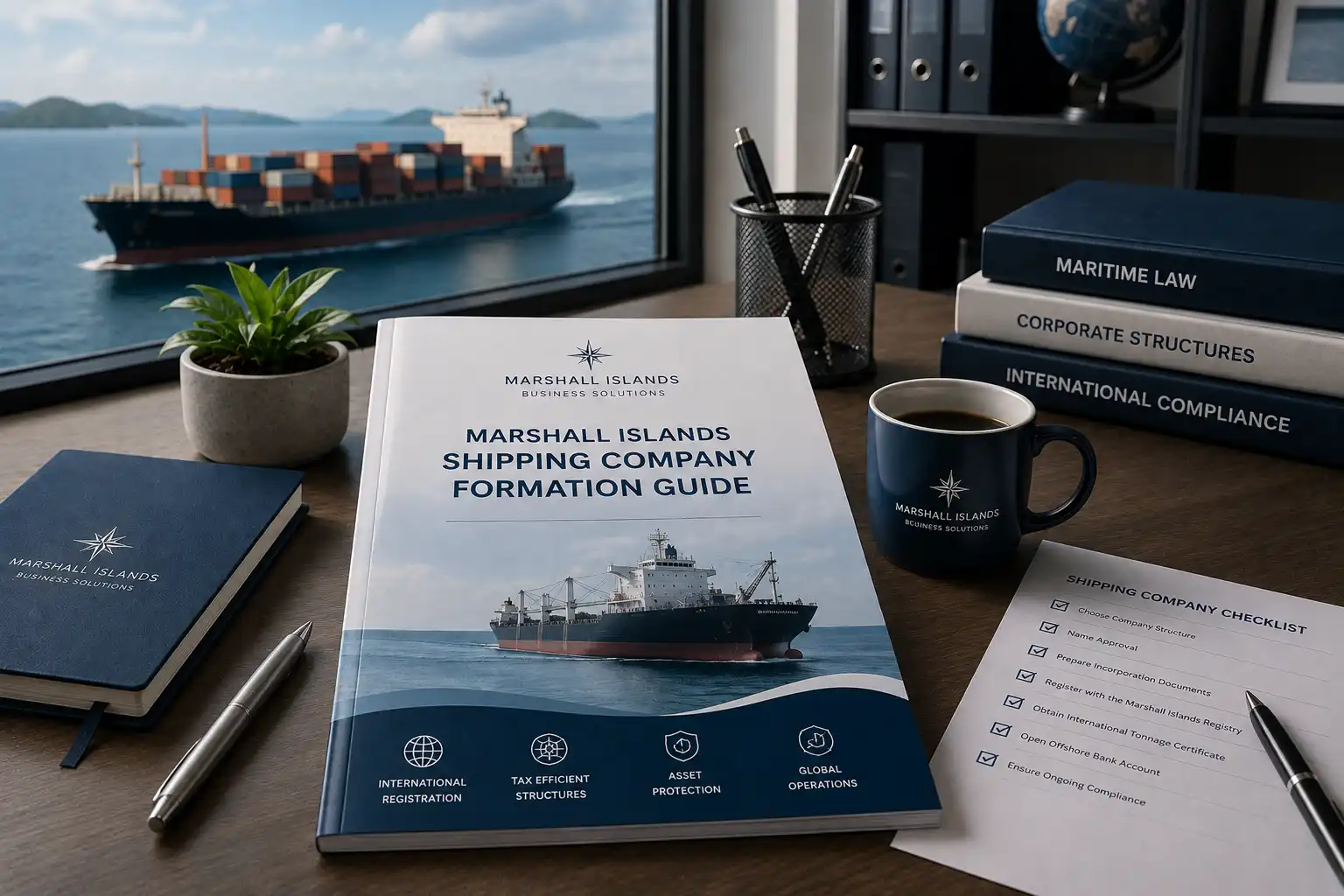
Marshall Islands Shipping Company Formation Guide
Introduction
A Marshall Islands shipping company formation is one of the most established and globally recognized offshore structures in the maritime industry. The Marshall Islands is widely regarded as a premier international flag state and offshore jurisdiction for vessel registration, ship ownership structures, maritime holding companies, and global shipping operations.
In 2026, shipping businesses face increasing regulatory complexity, higher compliance expectations, environmental reporting obligations, and stricter banking requirements. As a result, structuring a shipping company correctly is more important than ever.
The Marshall Islands offers a flexible, internationally respected legal framework for maritime businesses, making it a preferred jurisdiction for shipowners, operators, leasing companies, and maritime investors.
This guide explains how to form a Marshall Islands shipping company, why it is used, how the structure works, regulatory considerations, tax implications (global perspective), and real-world use cases in international shipping.
➡️ For foundational offshore context, see:
Marshall Islands Company Formation: The Complete 2026 Guide to Offshore Incorporation
Why the Marshall Islands Is Used for Shipping Companies
The Marshall Islands has become one of the most important maritime jurisdictions in the world due to its strong legal alignment with international shipping standards and its long-standing reputation as a reliable flag state.
Key reasons include:
1. Strong International Maritime Recognition
The Marshall Islands flag registry is widely recognized by:
- International Maritime Organization (IMO)
- Port authorities worldwide
- Classification societies
- Shipping insurers and banks
This global recognition is critical for vessel operations.
2. Flexible Corporate Structuring
Shipping companies often require multi-layer ownership structures. The Marshall Islands allows:
- Vessel owning companies
- Holding companies
- Leasing entities
- Management companies
This flexibility is essential for global shipping groups.
3. Efficient Incorporation Process
Speed is crucial in maritime transactions. The Marshall Islands offers:
- Fast incorporation
- Efficient vessel registration
- Streamlined documentation processes
4. Strong Offshore Legal Framework
The jurisdiction provides:
- Limited liability protection
- Flexible corporate law
- Internationally compatible structures
This makes it ideal for cross-border shipping operations.
What Is a Marshall Islands Shipping Company?
A Marshall Islands shipping company is typically a corporate entity formed to:
- Own vessels
- Manage maritime operations
- Enter charter agreements
- Handle international shipping contracts
- Structure fleet ownership
It is usually formed as either:
- Marshall Islands Corporation
- Marshall Islands LLC
➡️ For structural comparison:
Marshall Islands LLC vs Corporation: Which Structure Should You Choose? (Coming Soon)
Core Functions of a Shipping Company Structure
A shipping company in the Marshall Islands may perform several functions:
1. Vessel Ownership
The most common use is owning one or more ships.
2. Charter Agreements
Shipping companies enter:
- Time charter agreements
- Voyage charter agreements
- Bareboat charters
3. Fleet Management
Large shipping groups use Marshall Islands entities to manage fleets across jurisdictions.
4. Asset Holding
Ships are high-value assets and are often held through offshore structures for:
- Risk separation
- Liability protection
- Financing efficiency
➡️ For deeper insight:
Asset Protection with a Marshall Islands Offshore Company (Coming Soon)
Basic Shipping Company Structure
A typical Marshall Islands shipping structure looks like this:
Holding Company (Marshall Islands or another jurisdiction)
↓
Ship Owning Company (Marshall Islands entity)
↓
Vessel Registration (Marshall Islands flag or other flag state)
↓
Operational Charter Agreements
Benefits of a Marshall Islands Shipping Company
1. Limited Liability Protection
The company structure protects owners from:
- Vessel-related liabilities
- Charter disputes
- Operational risks
- Maritime claims
This is essential in high-risk maritime environments.
2. Asset Isolation
Each vessel can be placed into a separate entity.
This ensures:
- One vessel = one liability pool
- Risk does not spread across fleet
3. Financing Flexibility
Shipping companies often require financing from:
- Maritime banks
- Leasing companies
- Private investors
Marshall Islands entities are widely accepted in maritime finance.
4. Global Operational Compatibility
The structure is recognized internationally, making it suitable for:
- Cross-border charters
- Global trade routes
- International shipping contracts
Vessel Ownership Through Offshore Entities
Most shipping structures involve owning vessels through corporate entities rather than personal ownership.
Advantages include:
- Liability separation
- Easier transfer of ownership
- Structured financing options
- Tax planning flexibility (depending on jurisdiction)
Flag State Considerations
While the Marshall Islands is itself a major flag registry, companies may also:
- Register vessels under Marshall Islands flag
- Use other flag states depending on operational needs
Flag selection affects:
- Regulatory compliance
- Inspection requirements
- Insurance costs
- Operational flexibility
Types of Shipping Companies in the Marshall Islands
1. Vessel Ownership Companies
Hold legal title to ships.
2. Shipping Holding Companies
Own multiple vessel-owning subsidiaries.
➡️ For related structure:
Marshall Islands Holding Company Structure Explained (Coming Soon)
3. Chartering Companies
Enter commercial agreements for vessel usage.
4. Maritime Investment Companies
Used for shipping investments, leasing, and finance structures.
Banking and Shipping Companies
Shipping companies often require strong banking relationships due to:
- High-value transactions
- International payments
- Charter income flows
Banks typically assess:
- Vessel ownership structure
- Charter contracts
- Revenue sources
- Maritime compliance
➡️ For detailed banking insights:
Offshore Banking for Marshall Islands Companies: What You Need to Know (Coming Soon)
Common Uses of Marshall Islands Shipping Companies
1. Commercial Shipping Fleets
Used by global shipping operators managing multiple vessels.
2. Tanker Operations
High-value cargo transport structures.
3. Container Shipping
Global logistics and supply chain operations.
4. Yacht Ownership Structures
Private and commercial yacht ownership.
5. Offshore Support Vessels
Used in oil, gas, and offshore industries.
Compliance in Maritime Companies
Shipping companies must comply with:
- International Maritime Organization standards
- Safety regulations
- Environmental requirements
- Port state controls
Compliance is critical for operational continuity.
➡️ For broader compliance context:
Compliance, Substance and Reporting Requirements in the Marshall Islands
Risk Management in Shipping Structures
Shipping is inherently high-risk.
Risks include:
- Maritime accidents
- Cargo disputes
- Environmental liabilities
- Insurance claims
A structured offshore company helps isolate these risks.
Key Insight
A Marshall Islands shipping company is not just a legal entity—it is a risk management system for global maritime operations.
Link to Broader Offshore Strategy
Shipping companies often operate within larger offshore frameworks:
- Holding companies
- Investment structures
- Asset protection frameworks
- Tax planning strategies
➡️ For broader context, see:
- Marshall Islands Company Formation: The Complete 2026 Guide to Offshore Incorporation
- Asset Protection with a Marshall Islands Offshore Company (Coming Soon)
- Marshall Islands LLC vs Corporation: Which Structure Should You Choose? (Coming Soon)
- Marshall Islands Holding Company Structure Explained (Coming Soon)
Advanced Structures, Maritime Finance, Compliance, Tax Considerations and Real-World Applications
In Part 1, we covered the fundamentals of a Marshall Islands shipping company formation, including vessel ownership, corporate structuring, flag considerations, and core operational benefits. In Part 2, we move into advanced maritime structuring: fleet segmentation models, financing structures, regulatory compliance, insurance frameworks, tax considerations (global perspective), and practical use cases used by international shipping operators in 2026.
Shipping is one of the most regulated and capital-intensive industries in global commerce. A properly structured offshore shipping company is not just a legal entity — it is a strategic framework for risk isolation, financing efficiency, and global operational scalability.
➡️ For foundational offshore context, see:
Marshall Islands Company Formation: The Complete 2026 Guide to Offshore Incorporation
Advanced Shipping Company Structures
Shipping businesses rarely operate through a single entity. Instead, they use layered corporate structures designed to isolate risk and improve financing flexibility.
Below are the most commonly used advanced structures in Marshall Islands shipping setups.
1. Single Vessel SPV Structure (Most Common Model)
Single Vessel SPV (Special Purpose Vehicle):
Marshall Islands Holding Company
↓
Single Vessel Company (SPV)
↓
One Vessel Only
This is the most widely used structure in maritime operations.
Why it is used:
- Isolates liability per vessel
- Simplifies financing
- Reduces cross-fleet risk exposure
- Improves insurance clarity
If one vessel is involved in a claim or accident, liabilities do not spread to other ships.
2. Multi-SPV Fleet Structure
Marshall Islands Holding Company
↓
SPV 1 → Vessel A
SPV 2 → Vessel B
SPV 3 → Vessel C
This structure is used by mid-to-large shipping companies.
Advantages:
- Full risk segmentation across fleet
- Easier asset sales (one vessel = one company)
- Cleaner financing arrangements
- Better lender risk control
➡️ For broader structuring context:
Marshall Islands Holding Company Structure Explained (Coming Soon)
3. Leasing and Charter Structure
Shipping companies often separate ownership and operations:
Marshall Islands Ownership Company
↓
Leasing Company
↓
Operating Charter Company
Benefits:
- Operational flexibility
- Revenue separation
- Tax and accounting clarity (jurisdiction-dependent)
- Investor participation models
4. Maritime Investment Structure
Used for private investors:
Investor Group
↓
Marshall Islands Shipping Investment Company
↓
Fleet SPVs / Maritime Assets
Use case:
- Shipping funds
- Private equity maritime investments
- Joint venture fleets
Maritime Finance and Banking Considerations
Shipping companies depend heavily on structured finance and banking relationships.
1. Vessel Financing Models
Common financing options include:
- Mortgage financing
- Lease financing
- Private investor funding
- Syndicated lending
Marshall Islands companies are widely accepted in maritime financing due to their clear legal framework.
2. Bank Due Diligence Requirements
Banks typically require:
- Vessel ownership documentation
- Charter agreements
- Insurance coverage details
- Corporate structure charts
- Source of funds documentation
Shipping companies are classified as higher-risk entities, so documentation must be strong and consistent.
3. Cash Flow Structure in Shipping
Typical flow:
Charter Income
↓
Operating SPV
↓
Holding Company
↓
Reinvestment / Debt Service / Distribution
This ensures financial separation between operational and strategic layers.
4. Banking Challenges in Shipping
Common challenges include:
- High-value transaction scrutiny
- Cross-border payment monitoring
- Complex ownership structures
- Flag-state verification requirements
Well-documented structures significantly improve banking success rates.
➡️ For banking context:
Offshore Banking for Marshall Islands Companies: What You Need to Know (Coming Soon)
Tax Considerations (Global Perspective Only)
Shipping taxation is highly jurisdiction-dependent and influenced by international maritime tax conventions.
The Marshall Islands itself does not determine tax outcomes alone.
Key factors include:
- Ship operator tax residency
- Charter income source
- Permanent establishment rules
- International maritime tax regimes
- Controlled Foreign Company (CFC) rules
Shipping Income Classification
Shipping income may include:
- Charter revenue
- Freight income
- Lease income
- Vessel sale proceeds
Tax treatment varies widely depending on jurisdiction.
Flag vs Ownership Tax Separation
Important distinction:
- Flag state ≠ tax jurisdiction
- Ownership entity ≠ tax liability location
Tax obligations are typically determined by:
- Where management occurs
- Where owners reside
- Where contracts are executed
Key Insight
A Marshall Islands shipping company is primarily a structuring and liability framework, not a tax planning instrument by default.
Compliance and Maritime Regulation
Shipping companies operate under strict international regulations.
1. IMO Regulations
The International Maritime Organization (IMO) sets global standards for:
- Safety (SOLAS)
- Pollution control (MARPOL)
- Crew certification standards
2. Flag State Compliance
If vessels are registered under the Marshall Islands flag, they must comply with:
- Inspection requirements
- Safety certifications
- Environmental standards
- Crew documentation
3. Port State Control
Ships are inspected by port authorities worldwide.
Non-compliance can lead to:
- Detention
- Fines
- Operational delays
4. Corporate Compliance Requirements
At the company level:
- Ownership records must be maintained
- Vessel documentation must be updated
- Corporate governance must be recorded
- Due diligence must be satisfied
➡️ For compliance context:
Compliance, Substance and Reporting Requirements in the Marshall Islands
Maritime Insurance Structures
Insurance is a core component of shipping company formation.
1. Hull and Machinery Insurance
Covers:
- Vessel damage
- Structural failures
- Physical losses
2. Protection and Indemnity (P&I) Insurance
Covers:
- Crew liabilities
- Environmental damage
- Cargo claims
- Third-party liabilities
3. Cargo Insurance
Covers goods transported by vessel operators.
4. Insurance in SPV Structures
Each vessel SPV typically carries:
- Its own insurance policy
- Its own risk profile
- Its own liability coverage
This ensures clear risk isolation.
Economic Substance in Shipping Companies
Shipping companies are often subject to substance expectations depending on jurisdiction and structure.
Substance Indicators
Authorities and banks may assess:
- Where vessel management occurs
- Where charter decisions are made
- Where operational control exists
- Where financial oversight is performed
Shipping vs Holding Substance
Shipping SPVs generally require more operational substance than holding companies because they:
- Generate active income
- Manage high-risk assets
- Operate internationally
Best Practice
Maintain:
- Documented management decisions
- Clear operational records
- Contractual evidence of activity
- Financial transaction records
Common Mistakes in Shipping Company Formation
Mistake 1: Using One Company for Entire Fleet
This creates:
- Cross-liability risk
- Financing complications
- Insurance inefficiencies
Mistake 2: Weak Insurance Coverage
Under-insurance increases exposure to catastrophic losses.
Mistake 3: Poor Documentation
Missing:
- Charter agreements
- Vessel ownership records
- Financial statements
can lead to banking and compliance issues.
Mistake 4: Ignoring Regulatory Complexity
Shipping is highly regulated — ignoring IMO or port requirements leads to operational risk.
Mistake 5: Overcomplicated Structures
Too many layers can:
- Increase compliance burden
- Confuse banks
- Slow operations
Real-World Shipping Structure Examples
Example 1: Small Fleet Operator
Holding Company
↓
Single SPV
↓
One Vessel
Use case: independent shipowner or startup operator.
Example 2: Mid-Sized Shipping Company
Holding Company
↓
Multiple SPVs
↓
Individual vessels
Use case: regional shipping operators.
Example 3: Global Shipping Group
Parent Holding Company
↓
Regional Subsidiaries
↓
Fleet SPVs
↓
Charter Operators
Use case: multinational maritime enterprises.
Example 4: Maritime Investment Fund
Investor Fund Entity
↓
Marshall Islands Holding Company
↓
Fleet SPVs
Use case: institutional maritime investment.
Decision Framework: Is a Marshall Islands Shipping Company Right for You?
Step 1: Do you own or operate vessels?
- Yes → Strong fit
- No → Not necessary
Step 2: Do you need liability isolation?
- Yes → SPV structure required
- No → simpler structure may work
Step 3: Do you operate internationally?
- Yes → Marshall Islands is highly suitable
- No → alternative structure may suffice
Step 4: Do you require financing?
- Yes → structured SPV model recommended
- No → simplified ownership model possible
Future Trends (2026–2030)
1. Increased Environmental Regulation
Carbon reporting and emissions tracking will become more important.
2. Digital Shipping Compliance
AI-based maritime monitoring systems will increase transparency.
3. Banking Tightening for Maritime Sector
More documentation required for shipping transactions.
4. Expansion of SPV Structures
More fleets will adopt single-vessel SPV segmentation models.
Final Conclusion
A Marshall Islands shipping company formation provides one of the most effective international frameworks for vessel ownership, maritime investment, and global shipping operations.
Its strength lies not only in jurisdictional benefits, but in how effectively it enables:
- Risk isolation through SPVs
- Financing efficiency
- International recognition
- Operational flexibility
- Structured compliance management
However, success depends heavily on proper structuring, documentation, insurance coverage, and alignment with international maritime regulations.
When designed correctly, a Marshall Islands shipping structure becomes a powerful backbone for global maritime operations.
Related Articles:
To build a complete offshore maritime and corporate framework, explore:
- Marshall Islands FAQ
- Marshall Islands Company Formation
- Offshore Services
- Offshore Banks
- Marshall Islands Company Formation: The Complete 2026 Guide to Offshore Incorporation
- Marshall Islands IBC: Features, Advantages and Legal Structure Explained
- How to Open a Marshall Islands Offshore Company Step by Step
- Benefits of Marshall Islands Company Formation for International Businesses
- Marshall Islands Tax Benefits for Offshore Companies
- Compliance, Economic Substance and Reporting Requirements in the Marshall Islands